What Most Drivers in Northglenn Should Know Before Brake Noise Turns Into Brake Damage
Your brake pads are one of the most important safety components on your vehicle. They are designed to wear down over time, but waiting too long to replace them can turn a basic maintenance service into a much more expensive brake repair. A lot of drivers ask the same question: how often should brake pads be replaced? The honest answer is that it depends on how and where you drive. Some brake pads last 25,000 miles, while others can make it to 60,000 miles or more. Driving habits, vehicle size, traffic conditions, and pad material all make a difference. At Motiveworks Auto, we inspect brakes for drivers in Northglenn, Thornton, Westminster, and Broomfield all the time, and one thing is consistent: the people who catch brake wear early usually spend less and avoid bigger problems.
Average Brake Pad Life
In general, most brake pads last somewhere between:
- 25,000 to 60,000 miles
- Sometimes longer under ideal conditions
- Often less if you drive aggressively or do a lot of stop-and-go driving
That range is wide for a reason. A commuter who does mostly highway driving will usually get much more life out of their brakes than someone who drives in city traffic every day. If you drive in Colorado traffic, run errands often, or do a lot of short trips around town, your brake pads will usually wear faster than the textbook estimate.
What Causes Brake Pads to Wear Out Faster?
Brake pads do not wear on a perfect schedule. They wear based on real use.
Here are some of the biggest factors:
1. Stop-and-go driving
Frequent braking in traffic eats through pads faster than steady highway driving.
2. Driving style
Hard braking, last-second stops, and aggressive driving generate more heat and friction, which shortens brake pad life.
3. Vehicle size and weight
Heavier vehicles require more braking force. Trucks, SUVs, and loaded vehicles usually wear pads faster than lighter sedans.
4. Brake pad material
Some pads are built for quiet operation, some for performance, and some for longevity. Not all brake pads wear at the same rate.
5. Rotor condition
Worn or damaged rotors can cause pads to wear unevenly or more quickly.
6. Caliper problems
A sticking caliper can keep pressure on the pad even when you are not braking, which can destroy a set of pads much faster than normal.
Signs Your Brake Pads May Need To Be Replaced
Mileage is helpful, but symptoms matter more.
You may need new brake pads if you notice:
- Squeaking or squealing when braking
- Grinding noise
- Longer stopping distances
- A brake pedal that feels weak or inconsistent
- Vibration during braking
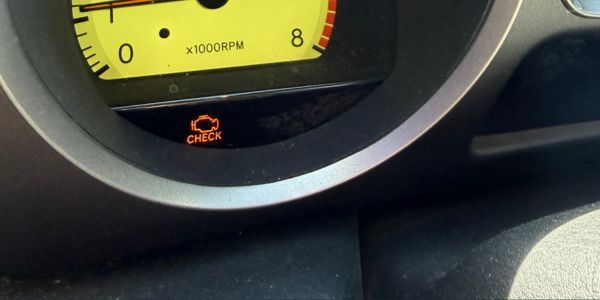
- A brake warning light
- Visible low pad thickness during inspection
A squeak does not always mean immediate failure, but it does mean the brakes need attention. A grinding noise is more serious. That often means the pad material is worn out and metal is contacting the rotor. At that point, what could have been a simple pad replacement may turn into pads and rotors, and sometimes even caliper-related repairs.
A Better Rule Than Mileage Alone
If you want the practical answer, here it is:
Have your brakes inspected at every oil service or tire rotation.
That is the smartest approach because it catches wear before it becomes damage. Brake pads do not always wear evenly, and not every vehicle gives obvious warning signs early.
Routine brake inspections help answer questions like:
- How much pad life is left?
- Are the inner and outer pads wearing evenly?
- Are the rotors still in good condition?
- Is there any sign of a sticking caliper or overheating?
- Can this wait, or should it be handled now?
That is the kind of information that allows you to plan instead of react.
How Thin Is Too Thin?
New brake pads usually start around 10 to 12 millimeters of friction material. By the time they get down near 4 millimeters, replacement is usually recommended. That does not mean every vehicle should wait that long. Some should be serviced earlier depending on wear pattern, noise, rotor condition, and how the vehicle is used.
This is why an actual inspection matters more than guessing.
What Happens If You Wait Too Long?
Putting off brake pad replacement can lead to:
- Rotor damage
- Reduced stopping power
- Longer stopping distances
- More heat in the brake system
- Uneven wear
- Higher repair costs
Ignoring worn brake pads is one of the easiest ways to turn a manageable repair into a much bigger bill.
Brake service is cheaper when it is done at the right time. It gets expensive when it is delayed until there is metal-on-metal contact.
Front Brake Pads vs Rear Brake Pads
Not all brake pads wear at the same speed.
On many vehicles, the front brake pads wear faster because the front brakes handle more of the stopping force. But on some newer vehicles, rear brake wear can happen faster than drivers expect due to electronic brake force distribution, stability systems, and driving conditions.
That is another reason not to assume. The front may not always be the only issue.
So How Often Should You Replace Brake Pads?
Here is the clean answer:
Replace brake pads when inspection shows they are worn near their service limit, not based on guesswork alone.
As a rough estimate, many drivers will need brake pads somewhere between 25,000 and 60,000 miles, but the correct replacement interval depends on your vehicle, driving style, and brake condition.
If you are hearing noise, feeling vibration, or it has been a while since your last brake inspection, it is time to have them checked.
Need Brake Service in Northglenn?
If your brakes are squeaking, grinding, vibrating, or just due for an inspection, we can help. At Motiveworks Auto, we perform honest brake inspections and clear recommendations so you know what is urgent, what can wait, and what condition your vehicle is actually in.
If you are in Northglenn, Thornton, Westminster, Broomfield, or the surrounding area, schedule a brake inspection with our team today.