The essential services and inspections that help your vehicle stay reliable after reaching the 100,000-mile milestone.
Reaching 100,000 miles is a major milestone for any vehicle. Modern cars are built to last longer than ever, but hitting six figures on the odometer means your vehicle is entering a stage where preventative maintenance becomes critical.
The good news: if the right services are performed at the right time, many vehicles can easily reach 200,000 miles or more.
The key is understanding which services actually matter at this point — and which ones are commonly overlooked.
Below is a practical breakdown of what most vehicles genuinely need around the 100,000-mile mark.
1. Spark Plug Replacement
Most modern vehicles use long-life iridium or platinum spark plugs that last between 90,000 and 120,000 miles.
If spark plugs are worn, you may notice:
- Reduced fuel economy
- Rough idle
- Engine misfires
- Slower acceleration
Replacing spark plugs at the proper interval restores engine efficiency and prevents unnecessary strain on ignition components like coils.
2. Timing Belt (If Equipped)
Not every vehicle has a timing belt, but if yours does, this is one of the most important services near 100,000 miles.
Timing belts typically require replacement between 90,000 and 105,000 miles depending on the manufacturer.
If a timing belt fails, it can cause:
- Severe engine damage
- Bent valves
- Complete engine failure
Because of this risk, timing belt replacement is preventative maintenance that should never be delayed.
3. Transmission Service
Transmission fluid is often overlooked, but it plays a major role in the longevity of your drivetrain.
At 100,000 miles many vehicles benefit from:
- Transmission fluid replacement
- Transmission filter replacement (if serviceable)
Fresh fluid helps maintain smooth shifting and prevents internal wear.
Ignoring transmission service can eventually lead to costly transmission repairs.
4. Cooling System Service
Your cooling system works constantly to protect the engine from overheating. Over time, coolant breaks down and loses its ability to protect internal components.
Around 100,000 miles many vehicles need:
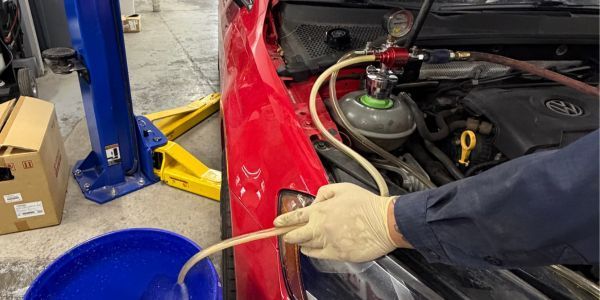
- Coolant replacement (coolant flush)
- Cooling system inspection
- Radiator hose inspection
- Water pump inspection
Proper cooling system maintenance prevents overheating and helps extend engine life.
5. Drive Belt Replacement
The serpentine belt powers critical components such as:
- Alternator
- Power steering pump
- Air conditioning compressor
- Water pump (on some vehicles)
By 100,000 miles the belt may begin to show wear or cracking.
Replacing worn belts before failure prevents sudden breakdowns.
6. Brake System Inspection
Even if brakes have been serviced before, the 100K mark is a good time for a full inspection including:
- Brake pads
- Rotors
- Brake fluid condition
- Brake hoses and hardware
Brake fluid in particular is frequently neglected but should be replaced periodically to prevent moisture contamination and internal corrosion.
7. Suspension and Steering Check
After 100,000 miles, many suspension components begin showing wear.
A professional inspection should check:
- Shocks and struts
- Ball joints
- Control arm bushings
- Tie rods
- Wheel bearings
These parts affect ride quality, steering precision, and tire wear.
8. Fuel System Service
Over time carbon deposits can build up inside the fuel system.
At higher mileage, many vehicles benefit from:
- Fuel system cleaning
- Throttle body cleaning
- Fuel injector service (when needed)
This helps maintain proper fuel delivery and engine efficiency.
9. Replace Engine and Cabin Air Filters
Air filters are small components that make a big difference.
At 100,000 miles you should ensure:
- Engine air filter is clean
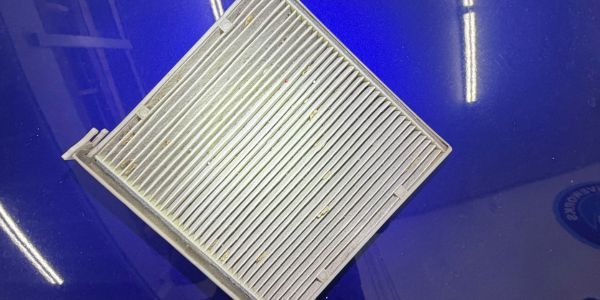
- Cabin air filter is replaced
A clean engine filter improves airflow and efficiency, while a new cabin filter keeps interior air clean.
10. Full Vehicle Inspection
Perhaps the most valuable service at 100,000 miles is a comprehensive vehicle inspection.
At this stage, small issues can begin to appear that are inexpensive to fix early but costly if ignored.
A full inspection typically includes:
- Fluid condition checks
- Leak inspection
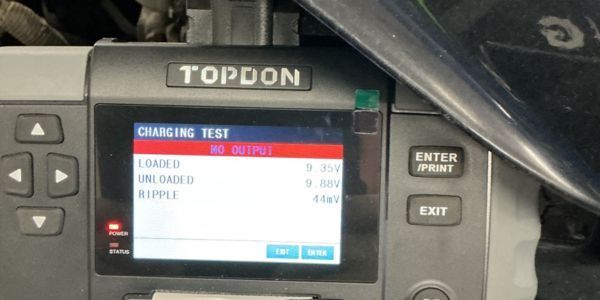
- Battery test
- Suspension evaluation
- Tire condition and alignment check
Catching problems early helps avoid major repairs later.
The Bottom Line
Hitting 100,000 miles does not mean your vehicle is nearing the end of its life.
In fact, with proper maintenance many vehicles continue running reliably for another 100,000 miles or more.
The key is staying proactive with maintenance rather than waiting for problems to appear.
If your vehicle is approaching the 100K milestone, scheduling a professional inspection can help ensure everything is operating as it should — and keep your car dependable for years to come.