Preparing for a long road trip from Northglenn? Discover how a specialized engine performance restoration service cleans deposits, protects oil, and boosts MPG.
Long road trips put your vehicle to the test. Driving hundreds of miles at sustained highway speeds, climbing steep mountain passes, and dealing with changing weather conditions requires your engine to perform at its best.
Recently, a customer came into Motiveworks Auto in Northglenn to get their vehicle ready for a drive out to Las Vegas. Beyond the standard safety checks—like inspecting brakes, fluids, and tires—their primary goal was to maximize engine health, ensure long-term reliability, and get the best possible fuel economy (MPG) on the highway. To achieve this, we performed a premium, three-part engine performance restoration service using BG EPR, MOA, and 44K. Here is a look at how these specific targeted treatments work inside your engine to restore efficiency and protect it on long-distance drives.
The Reality of Engine Deposits and Lost Efficiency
As vehicles age and accumulate miles, small amounts of carbon, varnish, and sludge naturally build up inside the engine. This happens even with regular oil changes. Over time, these deposits collect around critical components like the piston rings and fuel injectors. When piston rings stick due to sludge, the engine loses compression. Lower compression means the engine has to work harder to maintain highway speeds, which directly reduces your fuel economy. Similarly, dirty fuel injectors disrupt the precise spray pattern needed for clean combustion, leading to wasted fuel and sluggish performance.
The Three-Step Restoration Process
To prepare our customer’s vehicle for the demanding desert and mountain highway driving between Colorado and Nevada, we used a professional-grade sequence designed to clean, protect, and optimize the entire fuel and lubrication system.
1. Softening and Removing Sludge (Engine Performance Restoration)
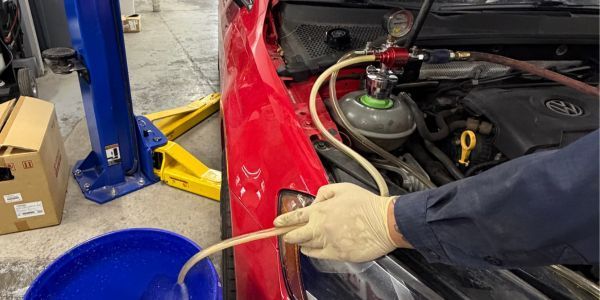
Before draining the old oil, we introduced a specialized engine performance restoration flush (BG EPR) into the crankcase. The engine is run at operating temperature for a short period, allowing the flush to circulate thoroughly. This process softens and dissolves accumulated sludge and hard carbon deposits from around the piston rings. Once dissolved, these contaminants are safely drained away with the old oil, freeing up the rings and restoring optimal engine compression.
2. Fortifying the New Oil (Engine Oil Conditioner)
Once the old oil is completely drained and a new oil filter is installed, we add high-quality fresh oil alongside an advanced engine oil conditioner (BG MOA). Standard engine oil can degrade under the intense heat of continuous highway driving. This conditioner strengthens the oil film, prevents premature oxidation, and keeps internal components lubricated even under extreme thermal stress. It ensures the new oil retains its protective qualities for the entire duration of a long road trip.
3. Cleaning the Fuel System (High-Concentration Fuel System Cleaner)
The final step addresses the fuel side of the engine. We added a high-concentration fuel system cleaner (BG 44K) directly into the gas tank. As the customer drives, this formula flows through the fuel system, cleaning the fuel injectors, intake valves, and combustion chambers. By removing baked-on carbon from the injectors, it restores the fine mist spray pattern necessary for efficient fuel combustion, maximizing highway MPG.
Why Road Trip Prep Matters for Colorado Drivers
Leaving the Denver Metro area for a long road trip usually means navigating significant elevation changes. Climbing up toward the mountains strains the cooling and lubrication systems. Once you clear the Rockies and head into the desert toward destinations like Vegas, high ambient temperatures put a different kind of stress on your engine oil.
Investing in deep system cleanliness before you leave provides several direct benefits:
- Improved Fuel Economy: Restoring compression and cleaning injectors ensures every drop of fuel is used efficiently, reducing your total trip cost at the pump.
- Restored Power: Cleaning internal components helps your vehicle maintain its passing power when climbing steep highway inclines.
- Reduced Thermal Stress: Clean oil passages and fortified engine oil prevent overheating and premature component wear in hot desert climates.
Diagnostics-First Care at Motiveworks Auto
At Motiveworks Auto, we believe in transparent, preventative vehicle care. We don't just pour additives into a vehicle; we evaluate the overall health of your car through digital inspections to ensure every system is ready for the road. If you are planning a road trip out of Northglenn, Thornton, Westminster, or Broomfield, taking the time to restore your engine's efficiency can save you money at the pump and provide peace of mind on the highway.
FAQ Section
Can an engine flush improve gas mileage? Yes. Over time, carbon deposits can cause piston rings to stick, which lowers engine compression. An engine performance restoration flush removes these deposits, restoring compression and allowing the engine to burn fuel more efficiently, which can improve MPG.
Is a professional fuel system cleaner different from over-the-counter bottles? Yes. Professional-grade cleaners like BG 44K contain a high concentration of high-quality polyetheramine (PEA) detergents. These are designed to survive the intense heat of the combustion chamber to clean tough carbon deposits on injectors and valves, whereas many standard retail alternatives are highly diluted.
Why does highway driving require extra engine protection? Sustained high speeds and long hours of continuous operation generate significant, constant heat. If your engine oil is degraded or contaminated with sludge, it can break down faster under these conditions, leading to poor lubrication and potential engine wear.