A Senior Technician’s Guide to On-Board Diagnostics, Colorado Emissions Compliance, and Smart Troubleshooting.
Glowing or flashing check engine light? Discover what your OBD-II codes actually mean, the risks of parts-store guessing, and how our professional diagnostic team in Northglenn isolates the true root cause.
Few dashboard icons cause as much instant anxiety as the little amber engine silhouette glowing on your instrument panel. Whether it flickers to life while you are cruising along I-25 past Thornton or idling at a stoplight in Westminster, the check engine light is an urgent indicator that your car’s On-Board Diagnostics (OBD-II) system has detected a malfunction in the powertrain or emissions controls.
A common misconception among Denver Metro drivers is that a check engine light means a specific component is broken and needs immediate replacement. In reality, the light simply means an internal operating parameter has drifted outside its engineered safety limits.
At Motiveworks Auto, we specialize in a diagnostics-first philosophy. Rather than throwing random parts at a warning code, we believe in using precise data to find the exact root cause, saving you time, money, and frustration.
Solid vs. Flashing: Identifying the Urgency
Before diving into the underlying systems, it is vital to understand how the warning light is behaving. The car's computer uses two distinct modes to communicate severity:
The Steady Glow (Non-Emergency, But High Priority)
If the light stays illuminated continuously while the engine is running, the computer has identified a persistent fault. Your vehicle is generally safe to drive to a trusted local repair shop, but the issue should not be ignored. Postponing service can cause fuel economy to drop rapidly or lead to accelerated wear on internal components.
The Flashing Light (Immediate Mechanical Emergency)
Critical Warning: If your check engine light is actively blinking or flashing, your engine is experiencing a severe, continuous misfire. This means unburned raw fuel is escaping the combustion chamber and dumping directly into your exhaust system.
An unaddressed engine misfire can superheat and melt your catalytic converter within miles, turning a straightforward sensor replacement into a multi-thousand-dollar repair. If your light begins flashing, pull over safely, turn off the engine, and have the vehicle towed to a qualified facility.
Common Root Causes of a Check Engine Light
Your vehicle relies on a vast web of electronic sensors to manage combustion, fuel delivery, and tailpipe emissions. When the light triggers, it typically points to a malfunction within one of these core areas:
- Evaporative Emissions System (EVAP) Faults: The EVAP loop captures and cleans toxic fuel vapors from your gas tank before they can escape into the atmosphere. A loose, cracked, or degraded gas cap can cause a system pressure drop, prompting an instant warning light.
- Oxygen Sensor ($O_2$) Malfunctions: These sensors monitor the volume of unburned oxygen in your exhaust stream. They tell the engine computer if the air-fuel mixture is running too rich (too much fuel) or too lean (too much air). A failing sensor blinds the computer, hurting fuel efficiency.
- Mass Airflow Sensor (MAF) Contamination: The MAF sensor measures the exact volume of air entering the engine intake. If it becomes coated in dust or engine oil, it sends incorrect values, leading to a rough idle, engine hesitation, or hard starting.
- Catalytic Converter Degradation: The converter burns off toxic carbon monoxide and hydrocarbons. Often, a converter code is triggered because an upstream issue—like an ignored spark plug misfire or internal oil consumption—has damaged the delicate catalyst material.
The Myth of the "Free Parts Store Scan"
When the check engine light pops up, many drivers visit a chain auto parts store for a free scan. While these simple hand-held scanners can retrieve a generic alphanumeric code (such as P0300 or P0420), a code is not a diagnosis.
[Generic Code Read] ──> Gives You a Symptom (e.g., P0171 Lean Bank 1)
[Professional Diagnostic] ──> Uncovers the Cause (e.g., Torn Intake Boot or Vacuum Leak)
For example, if a code reader indicates an "$O_2$ Sensor Circuit Malfunction," it does not automatically mean the sensor itself is broken. The true fault could be a broken electrical wire, a cracked vacuum line letting unmetered air into the intake, or a failing engine computer. Replacing the sensor without deeper testing often results in the check engine light turning right back on a day later. True diagnostic work requires analyzing live data streams, verifying wiring integrity, and testing system pressures.
The Motiveworks Advanced Diagnostic Process
At Motiveworks Auto in Northglenn, our certified technicians approach dashboard warning lights with rigorous, methodical evaluation. We don't guess with your hard-earned money.
1.Freeze Frame Data Extraction:Phase 1.We pull the exact snapshot of engine parameters (RPM, coolant temperature, vehicle speed, and load factor) recorded at the precise microsecond the fault code originally triggered.
2.Live Parameter Testing & Fuel Trims:Phase 2.We monitor your engine's fuel trim data while operating the vehicle. This lets us watch how hard the computer is working to correct air-and-fuel imbalances in real-time.
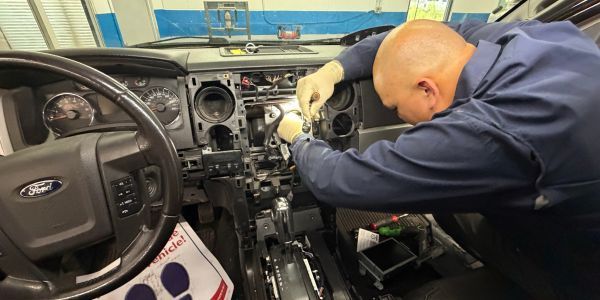
3.Comprehensive Digital Inspection:Phase 3.We back up our electronic testing with a physical inspection of structural components, hoses, and electrical harnesses. We send clear photos and detailed explanations straight to your phone so you can see the issue yourself.
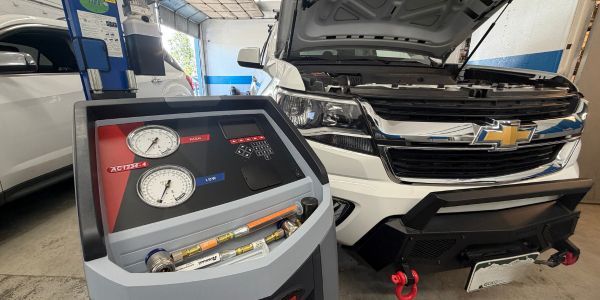
4.Targeted Component Testing:Phase 4.Using advanced lab scopes and smoke-testing machines, we isolate the exact broken component or system breach before any repair work begins.
FAQ: Frequently Asked Questions About Engine Diagnostics
Will a check engine light cause me to fail Colorado emissions testing?
Yes. Air Care Colorado testing facilities will automatically issue a failure if your check engine light is illuminated during the inspection, regardless of how well the vehicle runs. The vehicle must be properly diagnosed, repaired, and driven through a standard computer "readiness cycle" before it can pass.
Can a low engine oil level trigger the check engine light?
Yes. Modern vehicles utilize variable valve timing systems that rely on hydraulic engine oil pressure to adjust camshaft positions. If your engine oil is excessively low, dirty, or loses pressure, it can cause timing correlation faults that immediately illuminate the light.
What does it mean if my check engine light comes on and then goes away?
This indicates an intermittent fault. The engine computer monitored a parameter that failed during one trip, but returned to normal operations during subsequent driving cycles. Even if the light turns off naturally, the fault code remains stored in the computer's memory history and should be evaluated to prevent a permanent failure.
Honest, Locally Owned Auto Solutions
An illuminated dashboard light shouldn't be a source of stress or an open invitation for a corporate shop to upsell unnecessary parts. At Motiveworks Auto, we are committed to providing the clear answers and expert education our Northglenn, Thornton, and Westminster neighbors deserve. We treat every car that enters our bays with extreme ownership, standing firmly behind our workmanship and transparent communication.
Want the truth behind your dashboard warning light? Schedule an advanced engine diagnostic service online with Motiveworks Auto or call our shop at 11480 Cherokee St. in Northglenn to get back on the road with total confidence.