Understanding Brake Fade in Colorado
There is a specific moment every Colorado driver dreads. You are heading eastbound on I-70, descending from the Eisenhower Tunnel toward Northglenn, and traffic suddenly bunches up near Floyd Hill. You press the brake pedal, but instead of the firm, responsive bite you are used to, the pedal feels soft, spongy, and sinks dangerously close to the floorboard. If you have ever smelled a sharp, chemical burning scent or felt your car struggle to slow down after a long mountain descent, you have experienced a phenomenon known as brake fade. At Motiveworks Auto, we see the real-world toll that Colorado mountain driving takes on braking systems. Understanding why your brakes soften up after high-altitude driving is essential for keeping your vehicle dependable and your family safe.
What Is Brake Fade?
Brake fade is the temporary loss or significant reduction of stopping power caused by excessive heat buildup within your vehicle's braking system.
Your brakes work by converting kinetic energy (the movement of your vehicle) into thermal energy (heat) through friction. When you press the pedal, your brake calipers squeeze the brake pads against the spinning brake rotors.
During normal driving around Northglenn, Thornton, or Westminster, your brakes easily dissipate this heat into the surrounding air. However, sustained braking down a 6% mountain grade generates heat faster than the system can shed it. When temperatures spike, your braking components experience thermal overload.
The Two Main Types of Mountain Brake Fade
When your brake pedal goes soft or loses efficiency on a descent, one of two mechanical issues is happening behind your wheels.
1. Hydraulic Fluid Fade (The "Spongy" Pedal)
This is the most common culprit behind a soft brake pedal. Brake fluid is designed to withstand incredible heat, but it is also hygroscopic—meaning it naturally absorbs moisture from the air over time. When you constantly ride your brakes down a mountain pass, that extreme heat transfers into the brake calipers and cooks the fluid. If your brake fluid contains absorbed moisture, that water will boil and turn into steam bubbles. Because gas is compressible but liquid is not, your foot pressure wastes itself crushing the steam bubbles instead of moving the brake pads. The result is a terrifyingly soft, spongy pedal that travels all the way to the floor.
2. Friction Material Fade (The "Hard" Pedal with No Stopping Power)
Friction fade happens directly at the contact point between your brake pad and rotor. Brake pads are engineered with complex compounds held together by binding resins.
When pads exceed their maximum operating temperature, these internal resins begin to vaporize, outgassing a microscopic layer of hot gas between the pad and the rotor. This gas acts like a layer of grease, causing the pad to hydroplane across the rotor face. In this scenario, your brake pedal might still feel firm, but no matter how hard you push, the vehicle refuses to slow down.
Symptoms of Overheated Brakes to Watch For
Mountain brake stress rarely happens completely without warning. Keep your senses sharp for these indicators during your mountain treks:
- The Spongy Pedal: The pedal loses its resistance and sinks deep toward the floor.
- The Burning Chemical Odor: A sharp, pungent acrid smell that indicates your pad material is overheating.
- Reduced Stopping Efficiency: You notice you have to apply twice as much physical pressure just to maintain a safe distance from the car ahead.
- Steering Wheel Vibration: Extreme heat can cause temporary or permanent thermal distortion (warping) in the brake rotors, leading to a shaking steering wheel or pulsating pedal when braking.
The Risks of Ignoring Soft Brakes
Brake fade is a rolling emergency. If you continue to force overheated brakes to work, the consequences rapidly escalate:
Critical Safety Note: Ignoring brake fade can lead to complete hydraulic failure, glazed brake pads (where the friction material permanently crystallizes into a slick surface), warped rotors, or even localized wheel-end fires.
If you experience brake fade, the system must be allowed to cool completely. Pull over safely to the shoulder or a designated brake check area, and let the vehicle sit. Do not pour water onto hot brakes, as the sudden temperature drop will instantly crack your brake rotors.
The Diagnostic Process: How We Inspect Mountain-Stressed Brakes
When a driver brings a vehicle into Motiveworks Auto after a scary mountain descent, we don't just throw parts at the car. Our technicians conduct a transparent, thorough digital inspection to locate the exact point of thermal failure:
Fluid Boiling Point Analysis
We test the moisture content of your brake fluid. If the moisture levels exceed 3%, the fluid is no longer safe for high-temperature mountain driving and needs a complete flush.
Friction Material Inspection
We measure pad thickness and examine the pads for "glazing"—a shiny, glassy appearance caused by overheating that permanently ruins the pad's gripping ability.
Rotor Measurement
We use micrometers to check the thickness and runout of your brake rotors to ensure they meet factory safety margins and haven't warped under thermal stress.
Caliper and Line Evaluation
We inspect the rubber brake lines for heat expansion and ensure the caliper slider pins haven't seized due to cooked lubrication.
Preventative Tips for Driving Colorado Mountain Passes
The best way to handle brake fade is to prevent it from happening in the first place. Use these driving and maintenance strategies to protect your vehicle:
Master Engine Braking (Downshifting)
Do not rely solely on your brake pedal to control your speed on long descents. Shift your automatic or manual transmission into a lower gear (such as "Low," "2," or using your steering wheel paddle shifters). This forces the internal resistance of the engine to hold the vehicle back, taking the massive thermal burden off your service brakes.
Practice Interval Braking
Instead of riding the brakes continuously for miles, apply firm, steady pressure to drop your speed by 10–15 mph, then completely release the pedal. This gives your rotors brief windows of time to pump air through their internal cooling vents and shed heat.
Keep Fresh Brake Fluid in the System
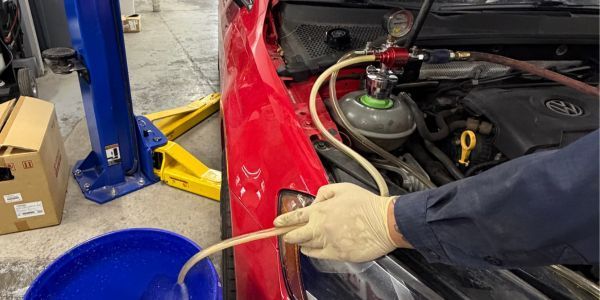
Because old fluid boils much faster, we recommend a professional brake fluid flush every two years or 30,000 miles for drivers who frequently travel into the high country. Fresh fluid restores a high boiling point and guarantees hydraulic integrity.
FAQ
Why do my brakes smell like they are burning after driving down from the mountains?
The burning smell is caused by the binding resins inside your brake pads reaching their thermal limits and gassing out. It is a clear warning sign that your brakes are operating outside their safe temperature window and need a chance to cool down.
Is engine braking bad for my car's transmission or engine?
No. Using your engine and transmission to control your speed down a steep grade is completely safe, provided you do not exceed the engine's maximum RPM (redline). Modern computer-controlled vehicles will safely manage the shifting to prevent damage. It is far safer and much cheaper to let the engine spin freely than to melt your braking system.
Can I just pump my brakes if they feel soft?
If your car is older and lacks an Anti-lock Braking System (ABS), pumping the brakes can help build temporary hydraulic pressure. However, almost all modern vehicles on Colorado roads feature ABS. If you have ABS and your pedal goes soft, apply firm, continuous pressure, downshift immediately to use engine braking, and safely guide the vehicle to the shoulder.
What is the difference between cheap brake pads and high-quality pads in the mountains?
Cheap, entry-level brake pads often use lower-grade friction materials and binding agents that fade at much lower temperatures. High-quality ceramic or semi-metallic pads are engineered with superior thermal thresholds, meaning they maintain stable friction properties even under the intense heat generated on steep Colorado descents.
Need a Post-Mountain Brake Check?
If your brake pedal felt soft, noisy, or unresponsive during your last trip into the Rockies, don't leave your safety to chance on your next commute through the Denver Metro Area. At Motiveworks Auto, we provide honest, diagnostics-first brake services to ensure your vehicle is ready for both local stop-and-go traffic and high-altitude challenges.
[Schedule Your Digital Brake Inspection at Motiveworks Auto Today]