Why Is My Check Engine Light On?

February 25, 2026

ian.scovill

What your dashboard warning really means — and what to do next.

Your check engine light turns on without warning. No noise. No smoke. The car feels fine. So now what?


If you’re driving in Northglenn, Thornton, Westminster, or the greater Denver area, this is one of the most common questions we hear every week.


Let’s break it down simply.


What Does the Check Engine Light Mean?

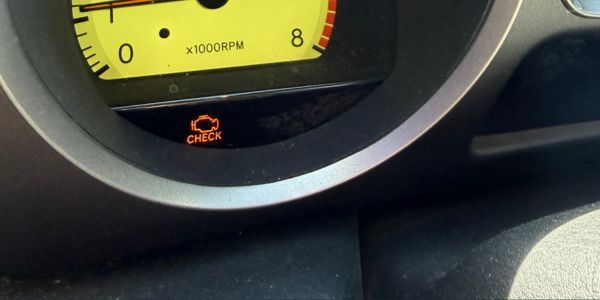
Your vehicle has dozens of sensors. When one of those sensors detects a problem, it sends a signal to the engine control module. That module turns on the check engine light.


The light means: The system detected a fault that needs attention.


It does not always mean something catastrophic. But it does mean something needs to be diagnosed properly.


The 5 Most Common Reasons Your Check Engine Light Is On


1. Loose or Faulty Gas Cap

This is the most common cause.

If your gas cap is loose, cracked, or not sealing, it can trigger the EVAP system fault.

Fix: Tighten the cap.
If the light stays on, it needs proper testing.


2. Faulty Oxygen Sensor

Your oxygen sensors monitor exhaust gases.

When they fail, your engine may:

  • Use more fuel
  • Run rough
  • Fail emissions

Ignoring this can damage your catalytic converter.


3. Catalytic Converter Issues

Your catalytic converter reduces harmful emissions.

If it fails, you may notice:

  • Poor acceleration
  • Reduced fuel economy
  • A sulfur smell

This is not something to ignore.


4. Spark Plug or Ignition Coil Failure

If your vehicle misfires, the check engine light may flash.

A flashing light means:

Stop driving and have it inspected immediately.


Driving with a misfire can cause major engine damage.


5. EVAP System Leak

The EVAP system controls fuel vapors. Small leaks are common. They won’t always affect how the car drives. But they will keep the light on. Proper smoke testing is required to locate the leak.


Solid Light vs. Flashing Light

This is important.


Solid Check Engine Light:
The vehicle is safe to drive short term. Schedule diagnosis soon.


Flashing Check Engine Light:
Active misfire. Stop driving. Tow it in. Flashing means potential engine damage.


Can I Just Clear the Code?

You can clear the light. But clearing the code does not fix the problem. The issue will return. And you lose valuable diagnostic data. Proper diagnosis matters.


Why Proper Diagnosis Is Critical

Many shops simply “scan codes.” That is not a diagnosis.


A code only tells us which system detected a problem. It does not tell us what failed. Imagine this: You are a detective responsible for finding a criminal in a specific room, within a specific house within the state. You would start by finding the zip code the criminal is in. Then you would narrow that search down to a neighborhood, then a street, then a house, then a floor and finally the room they are hiding in. The check engine light is the zip code. It tells us the area to start looking, or the system that is causing the warning. A proper diagnosis takes that information to pinpoint the neighborhood, street, house, floor and eventually the room. Finding the room the criminal is in, or finding the exact component that has failed and caused the check engine light is what proper diagnosis looks like.


True check engine light diagnosis includes:

  • Full system scan
  • Freeze-frame data review
  • Live data monitoring
  • Visual inspection
  • Electrical testing (if needed)
  • Smoke testing for EVAP leaks


This prevents guessing. And guessing gets expensive.


Is It Safe to Keep Driving?

It depends.


If the vehicle:

  • Runs rough
  • Shakes
  • Loses power
  • Has a flashing light


Stop driving.


If it drives normally and the light is solid, you can typically schedule service soon. But don’t ignore it for weeks. Small problems become large repairs.


Check Engine Light Diagnosis in Northglenn, CO

At Motiveworks Auto in Northglenn, we focus on accurate, pressure-free diagnostics. We don’t sell based on fear.


We test.
We verify.
We show you the data.


You receive:

  • Clear digital inspection photos
  • Plain-English explanations
  • Approval before repairs
  • Structured repair timelines
  • 3 Year / 36,000 Mile Nationwide Warranty


You stay in control.


The Bottom Line

Your check engine light is not something to panic about, but it is something to address. Early diagnosis saves money. Accurate testing prevents unnecessary repairs, and clarity builds trust. If your check engine light is on in Northglenn, Thornton, Westminster, or surrounding Denver communities, schedule a professional diagnostic and get real answers.


No guessing.
No pressure.
Just the truth.
By ian.scovill July 9, 2026
Colorado Summer Heat and Altitude Explained
By ian.scovill July 3, 2026
Why Your Car Is the Ultimate Vehicle for Freedom
By ian.scovill July 1, 2026
Why Your Dash Controls and Blend Doors Fail
By ian.scovill June 23, 2026
Is a foul or musty odor coming from your vents when you turn on the air conditioning? Discover what causes car AC smells and how Motiveworks Auto resolves them.
By ian.scovill June 19, 2026
Your tires are the only four points of contact between your vehicle and the road. Whether you are navigating a sudden summer downpour on I-25 through Thornton, dealing with springtime slush in Westminster, or commuting daily through Northglenn, your safety depends entirely on the condition of your rubber. Many drivers view tires as a seasonal concern, thinking about them only when the first snow falls. However, Colorado’s unique climate, temperature swings, and concrete highways stress tires 365 days a year. Understanding how to read your tires, recognize early warning signs of mechanical wear, and select the right rubber compound is essential to protecting your vehicle and your budget. The Three Core Categories: All-Season vs. All-Weather vs. Winter Choosing a tire in the Denver Metro area is more complicated than in most parts of the country. The standard categories can be misleading if you do not understand how the rubber chemistry reacts to our climate. +--------------------------------------------------------------------------+ | TIRE CATEGORY COMPARISON | +-------------------+---------------------------+--------------------------+ | Category | Temperature Range | Best Used For | +-------------------+---------------------------+--------------------------+ | All-Season | Above 45°F | Warm months, dry/wet road| +-------------------+---------------------------+--------------------------+ | All-Weather | Year-Round (Flexes cold) | Variable Front Range weather| +-------------------+---------------------------+--------------------------+ | Dedicated Winter | Below 45°F (Sub-zero) | Heavy mountain snow/ice | +-------------------+---------------------------+--------------------------+ Traditional All-Season Tires Despite the marketing name, traditional all-season tires are actually built for mild climates. The rubber compound is designed to withstand high summer heat, but it begins to harden and lose elasticity when ambient temperatures drop below 45°F. When the rubber hardens, your stopping distance increases significantly, even on completely dry pavement. All-Weather Tires This category has become an exceptional choice for drivers in Broomfield and Northglenn who want year-round safety without the hassle of a bi-annual tire swap. All-weather tires use a specialized rubber compound that remains pliable in sub-zero temperatures while maintaining durability in the summer. They carry the Three-Peak Mountain Snowflake (3PMSF) rating, meaning they are severe-snow certified and fully compliant with mountain traction laws. Dedicated Winter Tires Winter tires are engineered with soft, high-silica rubber compounds and complex patterns of tiny slits called sipes. The sipes flex to bite into packed snow and ice. However, running these tires in mild Colorado spring or summer conditions will destroy the soft tread blocks within a few thousand miles. Reading the Rubber: What Your Tire Wear is Trying to Tell You Tires rarely wear down perfectly evenly unless your suspension system is flawless. By inspecting your tread blocks, you can spot serious mechanical issues before they ruin an expensive set of rubber. Edge Wear (Inner or Outer Shoulder) If the tread is heavily worn on either the inside or outside edge while the center remains healthy, your vehicle's wheel alignment is out of specification. This is typically caused by incorrect camber (the vertical tilt of the wheel) or incorrect toe (the inward or outward angle of the tires relative to each other). Potholes on local roads or hitting curbs will easily shift these precise suspension angles. Center Wear When the center of the tread is noticeably more worn than the shoulders, the tire is consistently overinflated. High pressure causes the center of the contact patch to balloon outward, bearing the weight of the vehicle and reducing traction. Cupping or Scalloping If you notice dipped, wavy depressions across the tread rather than a smooth surface, your tire is "cupping." This occurs when the tire is physically bouncing down the road instead of tracking smoothly. It is a definitive symptom of worn-out shock absorbers, struts, or loose suspension bushings. Safety Warning: Cupped tires create a distinct, rhythmic roaring sound at highway speeds that sounds identical to a failing wheel bearing. Ignoring this symptom permanently accelerates wear on your steering components. How to Properly Evaluate and Maintain Your Tires To extract the maximum lifespan from your investment and ensure your braking performance remains reliable, follow this diagnostic maintenance routine. 1.Measure Tread Depth: Monthly Check. Do not rely on visual estimation. Use a digital tread depth gauge or the classic quarter test. Insert a quarter upside down into the tread grooves. If the top of Washington’s head is consistently covered, you have more than 4/32 of an inch of tread left. If his head becomes fully visible, your wet-weather stopping distance increases drastically, raising your risk of hydroplaning. 2.Perform Rotations: Every 5,000 to 7,000 Miles. Front tires handle the heavy forces of steering and bear the majority of your braking load. Rotating your tires systematically shifts these wear patterns, ensuring all four tires degrade at an equal rate, preserving predictable handling balance. 3.Verify Air Pressure Cold: Every Two Weeks. Always check your tire pressure in the morning before driving. Running a vehicle on underinflated tires forces the sidewalls to flex excessively, generating internal thermal stress that can cause sudden structural blowouts. 4.Check Alignment and Balances: Twice Per Year. Have a professional technician verify your alignment geometry on a specialized rack. Catching a minor toe-in or camber error early can double the operational lifespan of your tread blocks. The Motiveworks Approach to Tire and Suspension Health At Motiveworks Auto, we do not simply look at a worn tire and recommend a replacement. A tire is a symptom chart for your entire suspension system. If your vehicle has an underlying alignment issue or a loose ball joint, installing brand-new tires without fixing the root cause guarantees the new set will destroy itself prematurely. Every vehicle that enters our Northglenn facility receives a comprehensive digital vehicle inspection. We measure tread depth across the inside, center, and outside of each tire to map exactly how it interfaces with the road. If we discover irregular wear, we explain the mechanical cause clearly, show you the digital data, and provide transparent recommendations to help you make an educated decision for your vehicle's long-term reliability. Frequently Asked Questions Do I need to replace all four tires on an All-Wheel Drive (AWD) vehicle? Yes, in most cases. AWD systems rely on matching tire diameters to accurately balance power delivery between the front and rear axles. If you install two brand-new tires alongside two worn tires, the variance in rotational speed can overheat and permanently damage the center differential or transfer case. Why does my Tire Pressure Monitoring System (TPMS) light turn on during a cold morning? Air contracts when temperatures drop. For every 10-degree drop in ambient temperature, your tire pressure will decrease by approximately one pound per square inch (PSI). If your tires were already slightly low, a sudden cold front will drop the pressure enough to illuminate the dashboard warning light. What are tread wear indicators and how do I find them? Tread wear indicators, or "wear bars," are small, raised rubber bridges molded into the main longitudinal grooves of your tire. When the surrounding tread wears down completely flush with these bars, the tire has reached the legal wear limit of 2/32 of an inch and must be replaced immediately to maintain wet-weather safety.
By ian.scovill June 10, 2026
A Senior Technician’s Guide to On-Board Diagnostics, Colorado Emissions Compliance, and Smart Troubleshooting.
By ian.scovill June 1, 2026
Car AC Repair in Northglenn: R134a vs. R1234yf Refrigerant Explained
By ian.scovill May 28, 2026
Preparing for a long road trip from Northglenn? Discover how a specialized engine performance restoration service cleans deposits, protects oil, and boosts MPG.
By ian.scovill May 21, 2026
Maintenance Tricks to Beat Prices at the Pump
By ian.scovill May 20, 2026
Understanding Brake Fade in Colorado